

Last September saw this critic’s return to the Nashville Film Festival after a decade away, and the slate of films that Nashville Movie Dispatch got to witness at both the Regal Green Hills Cinema and legendary Belcourt Theatre throughout the week provided a bevy of fresh perspectives and thought-provoking ideas, whether they followed a Muslim hitman learning to give himself grace, or an aged author meeting her creation come to life. Other thematic elements to reappear in NaFF’s programming include feminine struggles with grief, decade-spanning battles for recognition in addition to justice, and of course, the pursuit to create art through sound in an aural medium for crowds of all sizes, creeds and genders. It was a blast to cover NaFF this year, and it will be a joy to return to the red carpet again next year. But until then, here’s everything this critic got to experience at the 2026 Nashville Film Festival!
Frampton (Rob Arthur) ★★★
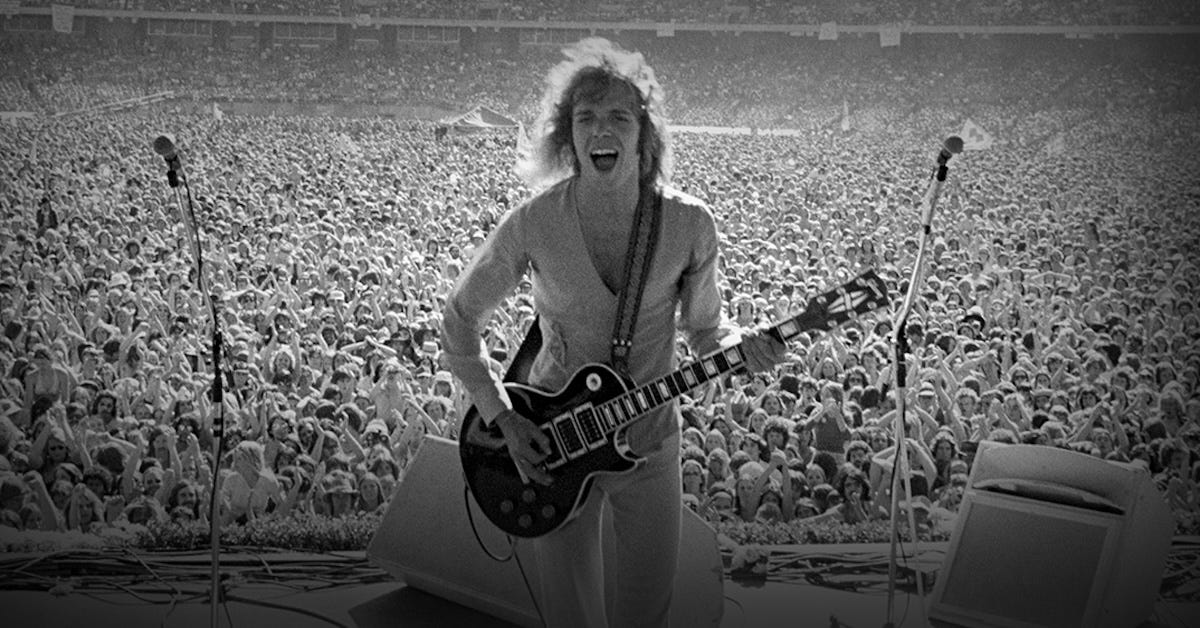
The 2026 Nashville Film Festival opened with the local premiere of Frampton, a music documentary about the legendary guitarist and singer-songwriter Peter Frampton which chronicles the man’s life, upbringing, meteoric rise to stardom in the 1970s and his current-day struggles with Inclusion Body Myositis (IBM). Frampton does drag when the doc details Frampton’s struggles post-Frampton Comes Alive, if only because when they’re not familiar to the stories of other musicians, they’re not interesting on an emotional level, such as the deceitful instance that got him cast in Sgt. Pepper’s Lonely Hearts Club Band.
It’s also worth noting that the movie doesn’t reinvent the wheel as far as storytelling within its medium, relying on the safe and standard Ken Burns effect on full-screen photos, straight cuts to archival footage and two-camera talking head interviews. All that being said, director Rob Arthur is the bandleader and keyboardist for Peter Frampton’s first and a filmmaker second, so relying on standards is a reasonable decision for a feature filmmaking debut, and a smart one at that because where Frampton does succeed is as an informative display of Peter Frampton’s creative process and meticulous personality as a musician, performer and all-around human being, from the simple but clever way he makes his guitar talk to conversations with audio engineers about what settings to adjust.
What Arthur gets from interviews with lifelong fans of the musician, his collaborators and even Frampton himself are fascinating, with the subject reflecting on his most pivotal milestones with down to earth honesty and sincerity; even pinning down a day he spent jamming at Abbey Road Studios with George Harrison and Phil Spector as the pinnacle of his career, further accompanied by Frampton and company’s recent visit to the studio during his Farewell Tour in 2019. There needed to be more compelling juxtapositions such as this, but otherwise, Frampton is a solid, serviceable music documentary saved by its subject, who persevered against the industry’s attempts to mold him from rock star to teen idol as valiantly as he does his illness.
Where The Hell Is Anna? (Taylor Morgan Dupuis) ★★★
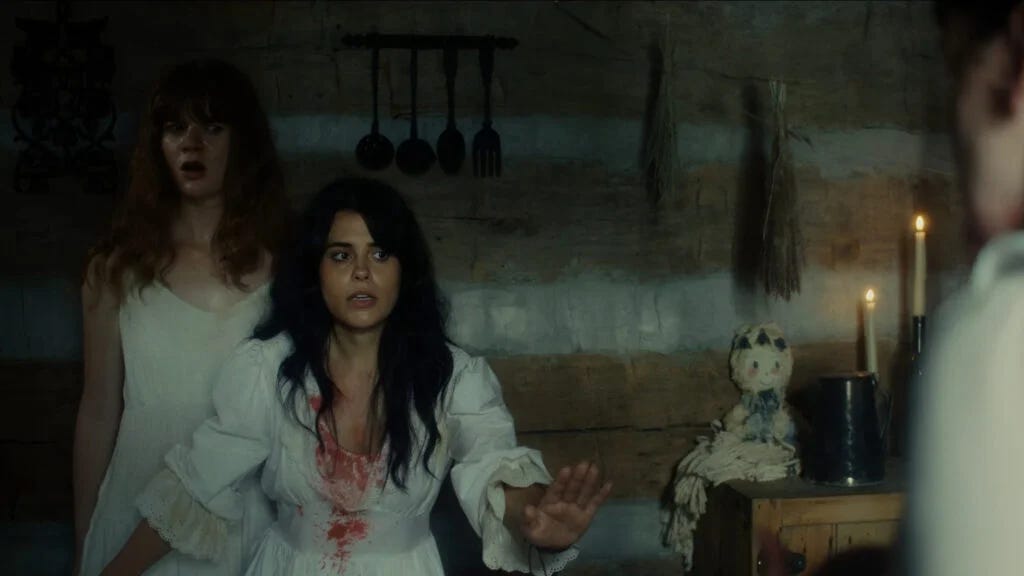
Day two of the Nashville Film Festival saw the world premiere of local filmmaker Taylor Morgan Dupuis’ first feature, Where The Hell Is Anna?, which she described in the post-film Q&A as a ‘horror-thriller with comedic elements’. The narrative here follows Derick (Dupuis), a woman reeling from a recent break-up who searches for her estranged best friend Anna (Allison Shrum) and discovers her in the commune of Arcana, a women’s-only retreat spearheaded by the mysterious Benjamin (Matthew Crosby) and Angela (Lauren Whistle). Under the newly assigned name Harmony, Anna is chosen to be inducted into the paradise the commune calls Summerland when the summer solstice arrives. Derick is determined to rescue her best friend from brainwashing and uncover what’s really happening in these woods, but she must also resolve her own deep-seated issues to finally get through to Anna.
If you couldn’t already tell, there’s a lot that Dupuis aims to do with this film, and this juggling act of genres is often successful, even if the horror elements are uneven. Select moments do an excellent job of building the mystery surrounding the convent or teasing a revelation about why Anna came to Arcana, only for the script to repeatedly withhold the payoff until the climax for no reason. In fact, the movie switches to a different genre from scene to scene to jarring effect, while the first half is further bogged down by slow pacing. What saves Where The Hell Is Anna?, however, is its hilarious comedy, whether it comes in the form of the incendiary extreme optimism of pregnant cult member Daisy (Kenzie Wynne) upon meeting Derick, or when our hero tries to maintain appearances after being questioned about her reason for joining Arcana, responding, “I love . . . trees?”. But the beating heart of Dupuis’ feature is her on-screen chemistry with Allison Shrum, and her lovely illustration of what lifelong female friendship is on a spiritual level. This adds powerful emotion and stakes to a solid story grounded in reality, while the mood is further enhanced by exteriors lensed in earthy greens and rituals lit in uncomfortably warm colors. Add well done ghoul makeup and an unnerving banjo-based score, and you have an especially deserving winner of the Best Tennessee Feature award.
Your Mother Your Mother Your Mother (Bassam Tariq) ★★★★1/2
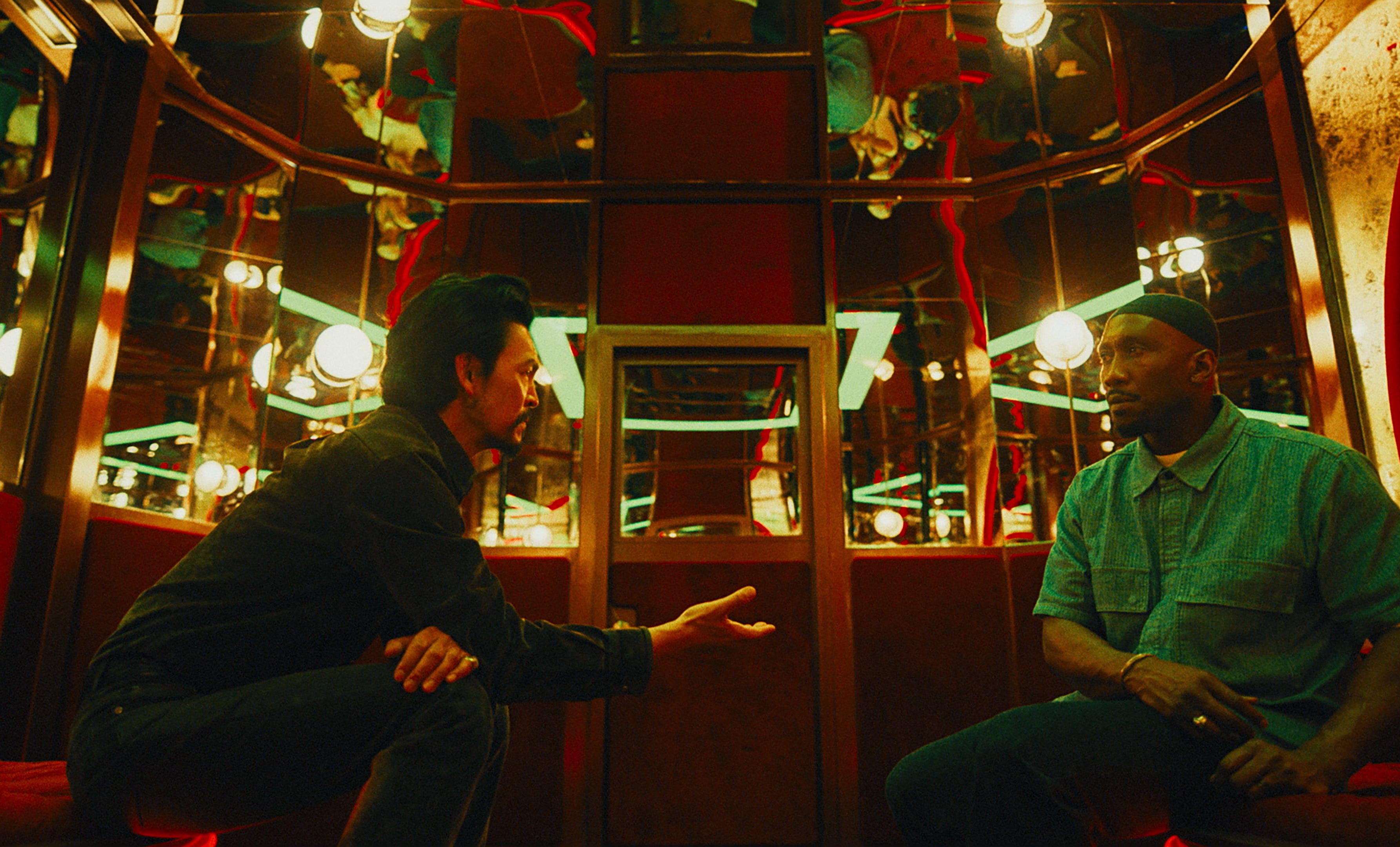
For years, writer-director Bassam Tariq and actor Mahershala Ali were attached to make a new Blade movie within the Marvel Cinematic Universe only for the project to fall through while in development hell. Thankfully, their respective creative ideas and athletic training for the film did not go to waste, as the pair implemented it in perfect fashion with Your Mother Your Mother Your Mother. In this action-drama, Ali stars as Latif, a Muslim man struggling to balance his career as a hitman with raising his daughter Fatiha (Adia), son Qadir (Jahleel Kamara) and infant Aziza as a newly single father after the death of his wife. The combined stresses and grief strain his relationship with his mosque’s imam (priest) Abdul Malik (Giancarlo Esposito) and contractor Mike Mahmoudi (Laith Nakli), who tasks Latif with getting his nephew Hatty (Abubakr Ali) out of trouble with Hwan Yoon (John Cho) a Christian pastor with an especially militant following.
As expected from a two-time Academy Award winner, Mahershala Ali conveys an internal rage with impeccable stoicism in his phenomenal lead performance. Latif is a man as stern with his children as he is with his Muslim community, and his candor during standoffs with adversaries builds the tension all the way up to a fever pitch, as the suspense is centered around hoping Latif actually doesn’t dual wield his daggers of choice in favor of filling himself with his wife’s grace. What’s especially fascinating about this collaboration between Ali and Tariq is its bigger emphasis on family than audiences might be expecting, given Your Mother Your Mother Your Mother’s marketing as a revenge action-thriller; time is spent showing Latif confronting his eldest daughter’s unusual way of exploring her sexuality as she reaches puberty and even going incredible lengths to find mother’s milk for Aziza because their baby can’t stand formula.
What makes Tariq’s latest film special is the excellent job it does to ground its story in the everyday struggles of the Muslim culture, from the harsh economic realities and spiritual folklore references that provide Latif with character depth to the genius setting of this story during Ramadan and emphasising the Muslim importance of praying twice daily which Latif ignores to scorn from Abdul. Tariq also manifests the societal box our hero and his family have been forced into with a 4:3 aspect ratio, and makes the action hard-hitting and brutal to watch yet stylish and breathtaking to follow with expert direction. Scant dialogue spouts the theme right at the end and some audiences may be divided about certain developments in the conclusion, but Tariq and Ali wanted to give us a modern-day Muslim anti-hero, and they have not only done that, but also placed Your Mother Your Mother Your Mother among the best movies of the year.
Sara Bareilles: Good Grief (Josh Alexander) ★★★★
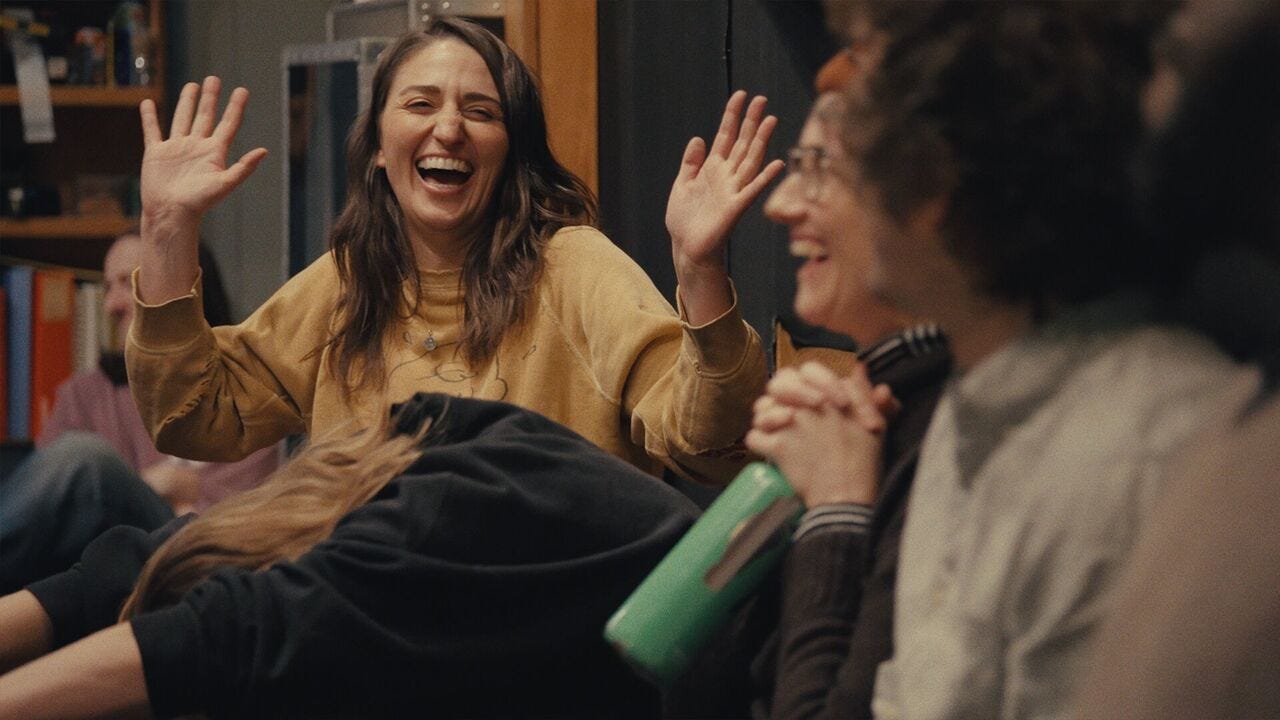
Sara Bareilles is among the best soulful pop singer-songwriters in music today, and Josh Alexander’s feature documentary about her return to the recording studio after a seven-year absence is a raw, realistic and powerful portrait of the musician and her creative process. Reuniting with bandmates Butterfly Boucher, Misty Boyce, Solomon Dorsey, Charley Drayton and Apollo Santo at Dreamland Recording Studios in Hurley, New York to record her most recent album, Good Grief, as a cathartic release for her sadness over infertility issues, and the deaths of her best friend/former manager Chad Joseph from lung cancer in 2020, and Broadway ally Gavin Creel in 2024.
Josh Alexander said he wanted to craft a nurturing film out of what was transpiring over this six-day period and succeeded with flying colors in making Good Grief. Right from the start, Sara addresses the camera from a Zoom window talking about her plans for the album, introducing us to the authentic angel she’s aged into since bursting onto the scene with “Love Song” in 2007. With renowned vérité cinematographer Jenna Rosher in tow, Alexander’s choice to follow Bareilles and her band with handheld camerawork in the moment before, during and after a recording session captures the process of recording music at its most intimate.
Sara is not the only person mourning something here, as evidenced by a revealing conversation where one of her bandmates speaks to her own infertility struggles, drawing sympathy from everyone around her. Early on, the singer-songwriter admits to being a perfectionist which other musicians might mishandle under similarly vulnerable circumstances, but Bareilles pilots the ship through confident assurance and determination. We can see in her eyes that she knows exactly what she wants but isn’t afraid to ask if her lyrics aren’t clear, such as an endearing instance early on when her band reviews the lyrics of “Home” but their leader still asks, “But it’s clear that he’s dead, right?”
And like other docs with similar subject matter, the audio mixing of all these sessions is immaculate, emphasizing the same vulnerability in Bareilles’ vocals that exists on her face as she wears her feelings on her sleeve while conveying the courage we all have to move forward after loss. Die-hard fans would have loved to see how she hit the ethereal high notes of “Still Crying”, and going to the second camera or more b-roll would have livened up the pacing more despite the engaging material, but Alexander is very intentional about when to cut to another angle or end a scene. Sara Bareilles: Good Grief is more than just a companion documentary to a stellar album: it’s a remarkable portrait of persevering through years-long grief, an outlet for audiences to experience their own emotional release, and a film unafraid to ask us what it means to show up to the emotions of others, in addition to your own.
SHED (Mila Vilaplana) ★★★1/2
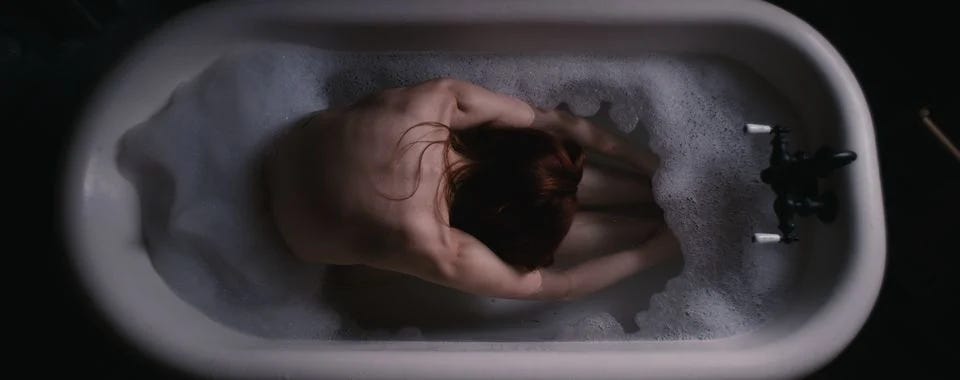
The Audience Award winner in the Tennessee Feature category was SHED, the first feature film from director Mila Vilaplana and writer-star Valerie Jane Parker. Here, Parker plays Becca Novak, a perfectionist mere days away from another birthday and has a lot going on: she’s just landed a huge account at her marketing firm under the watchful eye of her supervisor Leah (Kym Jackson), her sister Ruth (Amanda Righetti) has set her up on a blind date with mysterious energy healer Jackson (Armando Rivera), and is a wonderful aunt to her young niece Sophie (Ariel Browning). But the stresses of her job’s newfound responsibilities, uncomfortable behavior from co-worker Dameon (Taylor Novak), and hauntings from an apparitional clown (Audrey Venable) compound with Becca’s grief of recently losing her mother, putting her sanity at risk and sending the young woman on a psychological downward spiral.
SHED is Parker’s first feature-length screenplay, and the results provoke thoughtful, complex ideas about the unsettling process of getting older, whether it’s yearly preventative exams for experiences or the death of our loved ones as we age. In the grand scheme of things, transitioning toward middle age isn’t easy for viewers because we want to hold onto who we are in the present moment. Parker also communicates this in a brilliant lead performance that shows off her range; going from a natural admission of hesitance to go through with the blind date Ruth had planned to wearing visceral terror on her face as signs of aging appear in her mirror reflection.
Parker’s script is all about the anxiety of growing into the person you’re meant to be, but Mila Vilaplana’s direction adds a cosmic terror to Becca’s journey via smart storytelling decisions, whether it’s a dress Leah wears that makes her appear like a multi-mouthed monstrosity or stylish colors that pop with vibrancy that’s beautiful, yet made unnerving by the high-contrast shadows. The movie hits the ground running right at the start without slowing to a pace that better allows viewers to take in the unsettling mood until the halfway point, and a revelation about a formative experience in Becca’s evolution comes out of nowhere. Otherwise, SHED is an astounding debut for Valerie Jane Parker and Mila Vilaplana, one that brims with creativity and grounded horror that’ll leave audiences excited for more from this dynamic female duo.
A Talent For Murder (Anton Corbijn) ★★★1/2
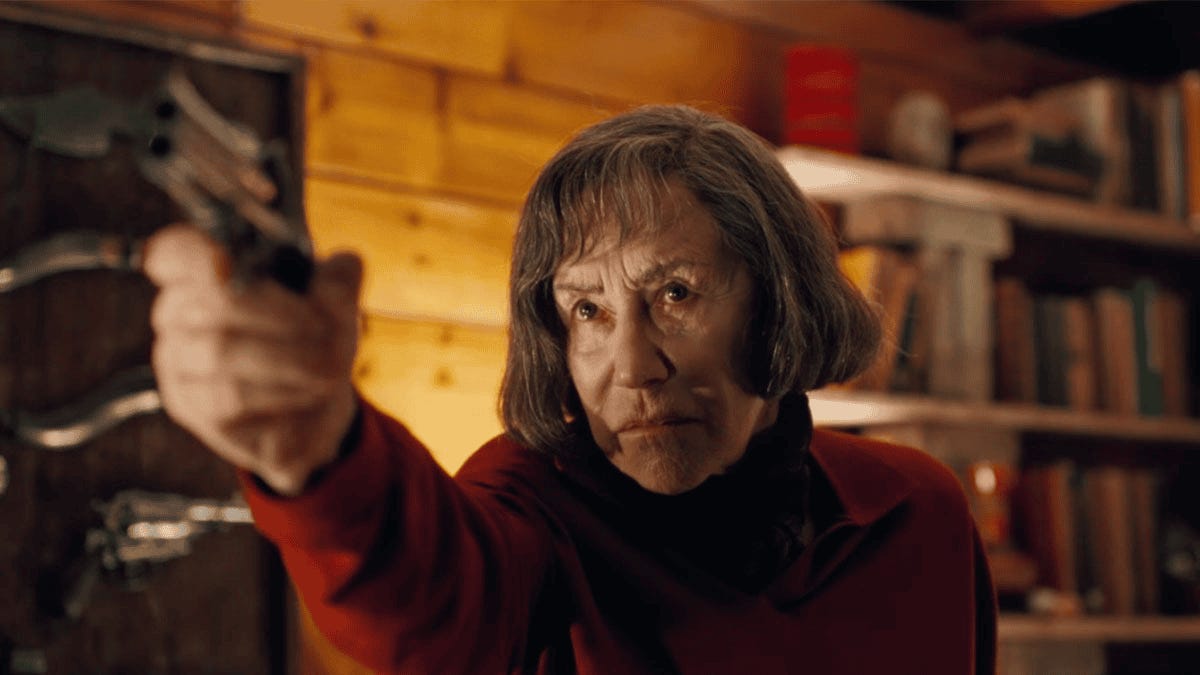
Anton Corbijn has become an overlooked master of the slow-burn thriller, and his latest film, A Talent For Murder, is no different. Based on the stage play Switzerland by Joanna Murray-Smith, who also wrote the film’s screenplay, the thriller follows aging author Patricia Highsmith (Helen Mirren) as she lives a reclusive life in Switzerland until a young emissary named Edward Ridgeway (Alden Ehrenrich) arrives on her doorstep on behalf of her publishing company to convince her to write one more novel centered around con artist Tom Ripley. The two collaborate on a story where the author’s greatest creation aims to con himself into the inheritance of wealthy heiress Clementine Balfour (Olivia Cooke), who Edward has dropped into this tale-within-a-tale after meeting her in reality on his train ride to Highsmith’s whereabouts. While the two professionals work together on the potential new book, a battle of wits develops between Edward’s industry knowhow and masculinity and Highsmith’s bitter yet keen awareness of the world, with unforeseen consequences emerging for both players before their eyes, and our own.
Like Corbijn’s previous mystery-thrillers, A Talent For Murder is slow paced in the early-goings, but the film’s biggest issue is its lack of conflict between Patricia and her new houseguest. What’s there is full of dark humor, from Patricia’s twisted references to the poisons, swords and rifles she’s collected over the years to the sharp jabs she makes at Edward’s fragility, which Mirren delivers with infectious cynicism matched by Ehrenrich’s increasingly unsettling performance built on a natural if uneasy restraint. Corbijn also directs this play adaptation through stylish, decadent locations and a score that swells with grand terror, while moody shadows heighten the intrigue by the scene. In addition, Corbijn’s vision for suspense helps the film move from Highsmith’s manor to the fictional world she and Ridgeway are concocting and back again with fluid, easy-to-follow writing and pacing. The movie ultimately progresses toward an interesting idea about the ongoing battle between the artist and corporatism in the age of artificial intelligence as Ridgeway evolves into a real-life Tom Ripley, but the build lacks the appropriate amount of tooth to say something fresh instead of familiar. Regardless, the cast and Corbijn’s smart direction keep A Talent For Murder an entertaining watch from start to finish.

4000 Days (Daniel E. Catullo III) ★★★★1/2
In addition to the Frampton documentary that opened the festival, 10 Lives Studios also brought 4000 Days to the Nashville Film Festival, where it deservedly won the Documentary Feature Audience Award. Directed by Daniel E. Catullo III, 4000 Days refers to the nearly eleven-year battle for three families across the United States to pass the REACH Act, a federal bill that would ban hazing rituals on college campuses across the nation. The documentary follows Gary and Julie DeVercelly who lost their son Gary Jr. to an initiation practice at Rider University in New Jersey, Linda and Eric Oakes whose son Adam died while pledging at VCU, and Kim and TJ Burch, whose son Nolan perished during a ritual at West Virginia University.
There are talking head interviews with these subjects here and there, but what’s fascinating about 4000 Days is how in-depth the documentary goes in not only broadening its topic on Greek hazing to touch on sexual assaults, but also following these parents as they aim to enact change on the grassroots level. Catullo gets unprecedented access in the room as Gary DeVercelly and the Oakes family visit with various high-ranking fraternity presidents, university officials and even federal politicians on both sides of the political aisle to try and add sponsors to the REACH Act. These meetings are brilliantly juxtaposed with the families touring the ominous, harrowing places where their children were ordered to senselessly drink themselves toward oblivion, as well as Schoolhouse Rock-influenced animated sequences that darkly illustrate politics’ financial connection to Greek life institutions and their methods of intimidating everyday working Americans throughout the legal process.
Catullo also includes conversations among the parents themselves, where they express uncertainty in attaching their movement to deep-pocketed authorities that could potentially sink their efforts. The documentary’s greatest pathos comes in the moment, such as when the Oakes family breaks down in tears upon the unveiling of a bench in Adam’s name, mere minutes after a meeting with local politicians who ask Catullo’s crew to turn the cameras off, flaring their distrust. There are minor flaws, whether it’s subtitles not staying on-screen for long enough, and imagery familiar to documentaries dealing with similar material (eg. All The Empty Rooms). It can also be debated that more diverse subjects could have been followed, especially since the Burch family receives less focus than the DeVercelly and Oakes parents, but that communicates the wrong idea. At its core, 4000 Days is a compelling, devastating display of ordinary Americans fighting entrenched institutional interests to achieve the justice they rightly deserve.
Stages (Ryan Booth) ★★★★
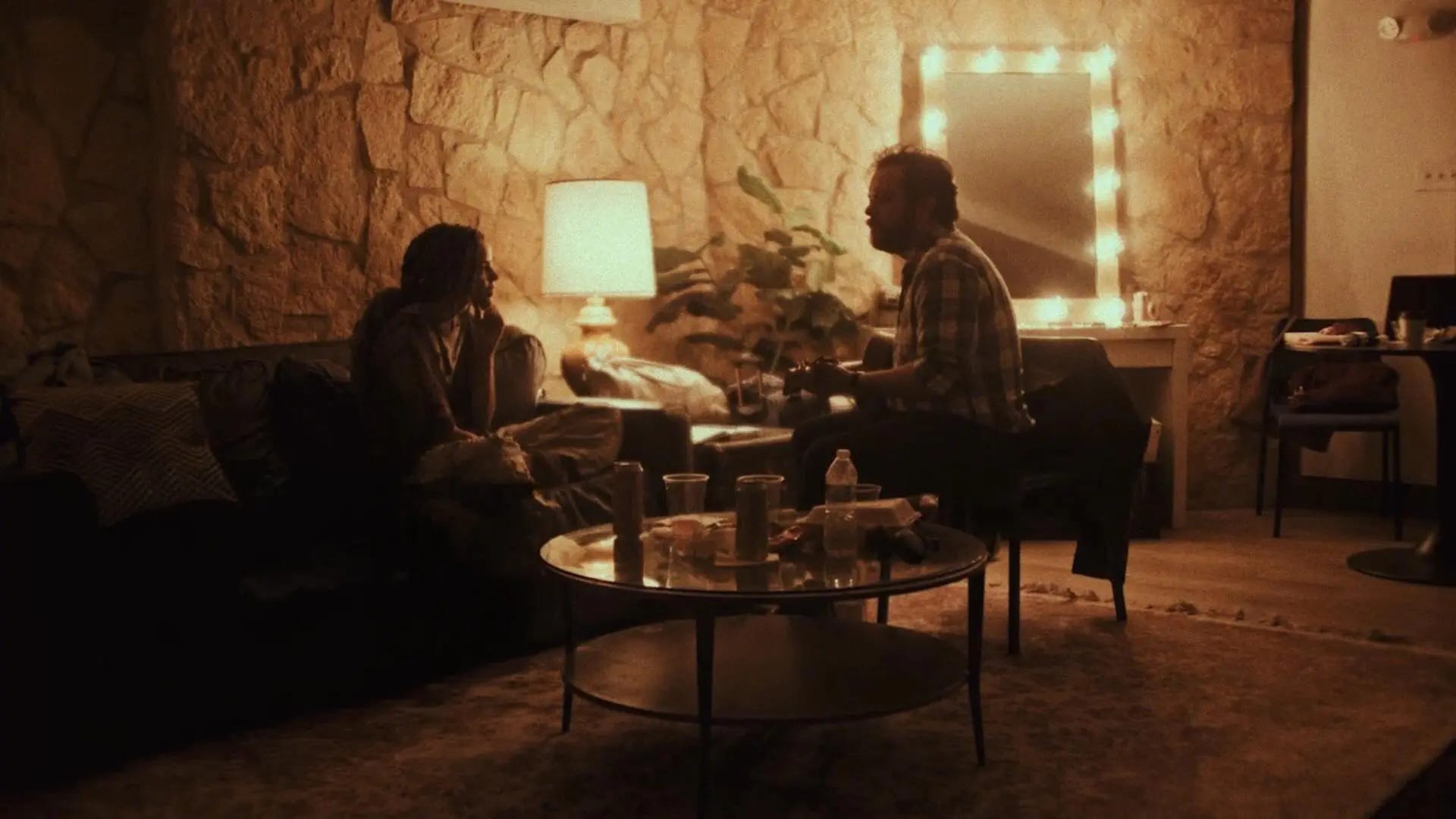
The Audience Award winner in the Narrative Feature category was New York-based filmmaker Ryan Booth’s feature Stages, which world premiered at South by Southwest to well-earned praise. The movie is about Ben Garza (David Ramirez), a singer-songwriter still reeling from the recent breakup of his band The Heights. He embarks on his first solo tour across the south-southeastern United States with his manager Rita (Jolene Blalock, but credited as Jolene), who has also booked rising star Jessie Ramos (Leslie Grace) to join him as his opener. Jessie’s ever-increasing popularity on the tour, interactions with past bandmates and FaceTime calls with his wife Lucy (Amanda Sudano Ramirez) and infant daughter only deepen the internal crisis within Ben that drives him toward deciding whether to continue pursuing a lifelong career in music or make a life-altering, but otherwise necessary pivot toward stability.
What makes Stages a special example of independent film is its script. Co-writers Bradley Jackson and Dan Steele deconstruct the bourgeois musician as a figure full of passion and pride, and all the faults that arise with both traits; Ben is a man who refuses to let the reality of his family’s economic situation pump the brakes on his aspirations; believing wholeheartedly that music is his calling. However, allusions to control issues and micromanagement throughout his arc hint at the reason behind The Heights’ initial disbanding, and even return when Jessie is writing a beautiful song herself only for Ben to write his own verse, morphing the tune into an unwanted duet. This moment is also a standout example of Leslie Grace’s performance here; her reactions to Ben’s actions are a visceral mix of inner frustration, fascination with his new lyrics as well as philosophies about performance, and pity for her companion.
It’s all well-meaning from Ben’s perspective, however, as the music on this soundtrack is full of beautiful songwriting from Ramirez, who wrote all the songs presumably from his character’s point of view, providing us a soulful window into his mind. Stages also happens to be Ryan Booth’s first feature film, and his aesthetics blur the line between documentary and narrative filmmaking, from a brief Behind The Music-esque photo montage at the start to observing these characters at a distance. The camerawork can be overzealous with its handheld feel and this story feels made for a very specific audience inside the music industry, but there’s also a layer for casual audiences to read Stages as a phenomenal character study of the middle class artist in any profession or stage in life refusing to let go of a dream.
Being Heumann (Sian Heder) ★★1/2
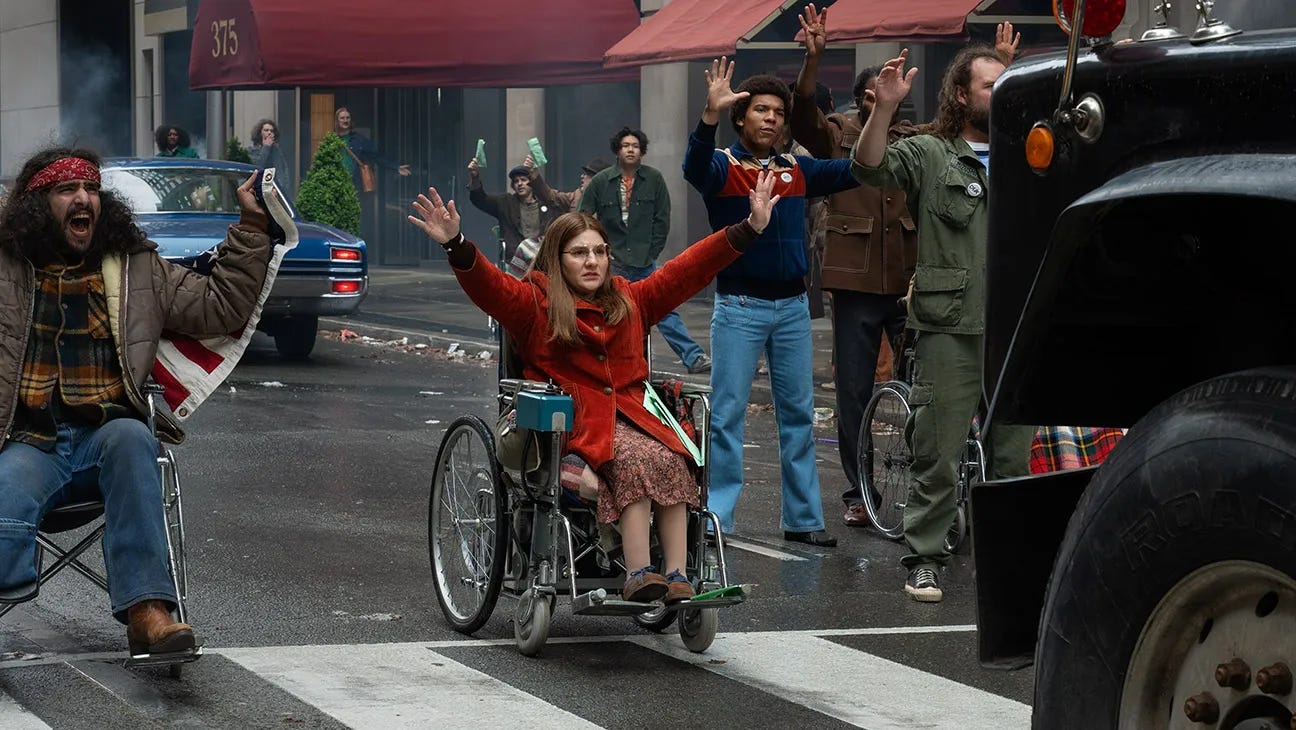
The closing night presentation of this year’s Nashville Film Festival was Being Heumann, co-writer/director Sian Heder’s first film after CODA which won the Best Picture Oscar in 2022. Her latest is a biopic about the wheelchair-bound disability rights advocate Judy Heumann (Ruth Madeley) and her crusade to get Section 504 of the Rehabilitation Act of 1973 signed into law by Joseph Califano (Mark Ruffalo), this era’s US Secretary of Health, Education and Welfare (HEW). What starts out as protests that block traffic and attract the attention of reporter Evan White (Dylan O’Brien) eventually becomes a prolonged sit-in at the San Francisco office of the U.S. Department of HEW, led by Judy and her coalition of advocates, all of whom refuse to leave until Califano puts pen to paper and finally implements Section 504, which prohibits discrimination against people with disabilities.
Being Heumann deserves credit for its commitment to authenticity, particularly in casting actors with disabilities. Many handicapped Americans were beneficiaries for the results of Judy’s activism and they each get their time to shine, from Andrew Pilkington’s dedicated turn as cerebral palsy activist Hale Zukas to Ray Fisher’s portrayal of Chuck Jackson, whose assistance to fellow Black Panther and MS activist Brad Lomax (Antwan Tolliver) is given meaningful attention. But as the leader of this game-changing sit-in, Ruth Madeley is a tour de force; wearing relentless conviction on her face in every scene and conveying a fierce determination to fight with fury for the basic human rights she and her camp deserve. Mark Ruffalo also does well with the material he’s given; Califano is the kind of politician who wants to do things by the book, but a spineless coward when faced with conflict and red tape. Heder’s latest is also at its best when it’s quiet and intimate, such as our look at Judy’s strenuous morning routine and a romantic pursuit that establishes her as a woman longing for power.
Unfortunately, scenes like those are few and far between in Being Heumann. In fact, for a movie with that title and its accomplishments in casting many disabled people in speaking roles, we don’t see these characters enough as, well, human beings. A scene where Judy’s fellow protesters give rousing testimonials to Califano’s representatives is certainly riveting, but there’s more to this ensemble than just the causes for which they fight. Judy is given an arc where she must learn to let her fellow activists fight in ways other than this sit-in that aren’t detrimental to their health and conditions, but there’s no discernible progression whatsoever; the change just happens at the snap of a finger.
Instead of further humanizing these characters, we witness their intense infighting when Judy’s team tries to figure out next steps that make everyone happy, raucous horseplay in hallways and juvenile humor that sometimes plays these disabilities for comedy which may ruffle some viewers’ feathers; examples include a blind teenager calling his mother asking for clothes and Judy’s wheelchair getting caught on Evan’s microphone cord. Even the lyrics of Iggy Pop’s “The Passenger” - ‘I am a passenger/I ride and I ride’ - playing beneath the opening shots of Judy riding her wheelchair to a protest are literal and tone deaf to the point of inducing cringes. It breaks this autistic critic’s heart to say that what Being Heumann accomplishes in representation and acting belong in a better movie, but sadly, Heder’s follow-up to her Best Picture winner is less a grounded, humanist study of its subject, and more so a preachy, cartoonish example of the next evolution in Oscar bait.
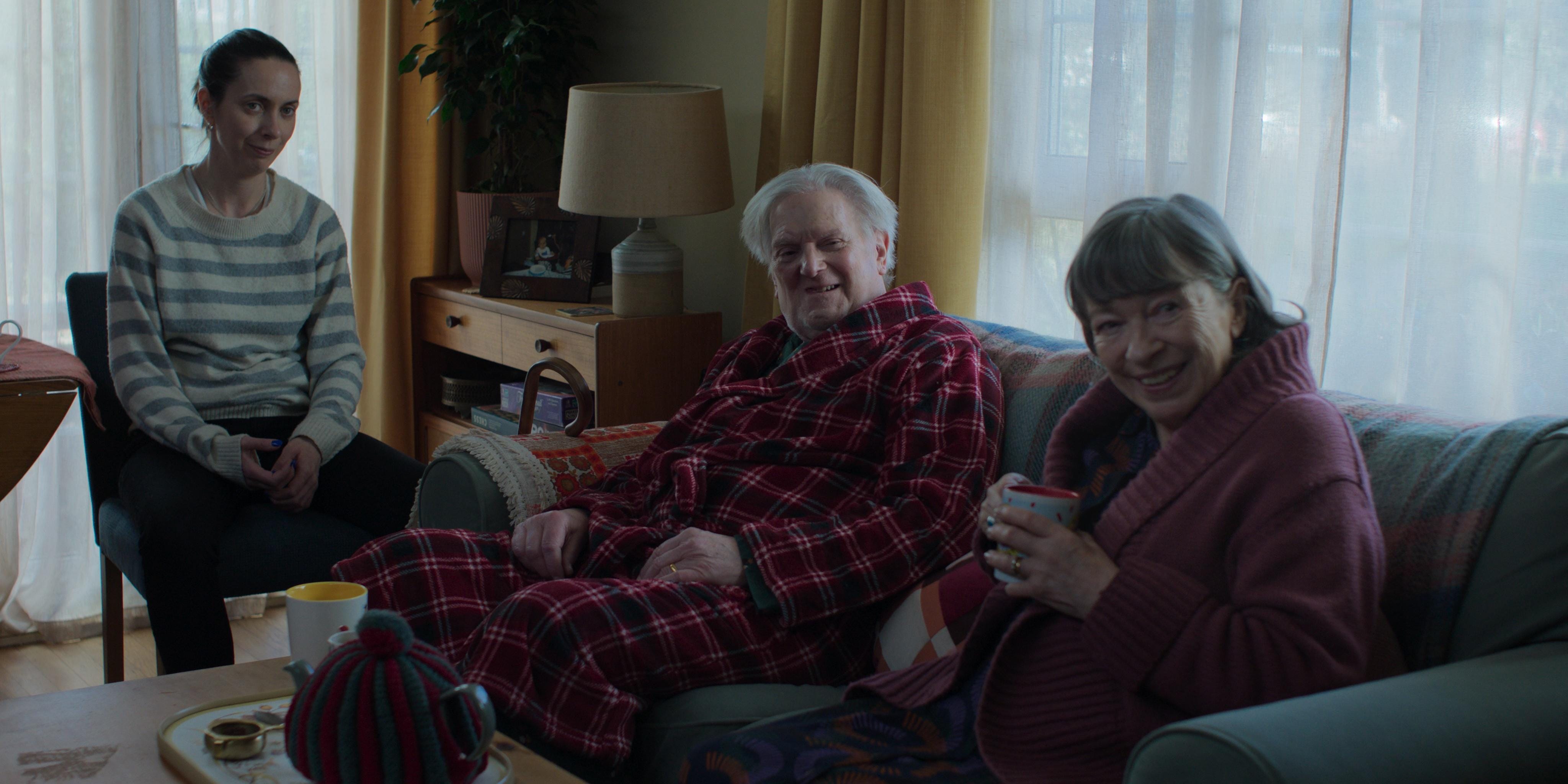
Tender Loving Care (Mike Leigh) ★★★★1/2
British director Mike Leigh made headlines this summer by announcing that Tender Loving Care may be his final film due to struggles with myositis, a condition where the immune system attacks the muscles, hindering his mobility on a film set. If his claim is indeed true, Leigh is going out on top with a tale that follows Amy (Kate O’Flynn), a government child protection worker, moving in with Rosie (Alice Bailey Johnson), her bubbly best friend in social services. Amy regularly visits her sweet elderly parents, mother Birdie and father Geoff (Marion Bailey and Paul Jesson) hesitant to tell them about her recent split from her boyfriend given she, like Rosie, is approaching her forties. But little do Amy and Rosie know that Amy’s parents have opinions they’re keeping a secret from their daughter while Geoff hides a battle nobody can see, and very little time before it comes to the forefront of his life and that of his loved ones.
Leigh’s style often involves working with his cast via lengthy improvisations developed over several weeks, and this approach adds a constant realism to these characters’ private lives throughout Tender Loving Care, whether it’s a playful night of Amy and Rosie dancing in their pajamas or a moment of unbridled happiness and relief between Birdie and Geoff. His directorial approach also leaves room open for the cast to react to given lines of dialogue visually when shooting tight angles of his actors, and those make their presence at a beautiful editing pace. Meanwhile, the progression toward the main conflict of the film does take time, but the subtlety in the dialogue that takes us there hits like a freight train, as do humorous coincidences like an eccentric hoarder Rosie visits for a wellness check showing up later during Amy’s errands.
It can also be debated that Rosie is a reference to films from Leigh’s past, because Alice Bailey Johnson lends her an endearing warmth and bubbly demeanor reminiscent of Sally Hawkins’ constantly optimistic protagonist from his 2008 comedy Happy-Go-Lucky. To round out the stellar performances, Kate O’Flynn communicates an authentic self-doubt that she’ll be okay post-breakup after completing her move-in with Rosie, Paul Jesson wears a smile on his face in addition to visible strain while processing a misunderstanding he made, and Marion Bailey demonstrates incredible range with the ability to be cheery and affectionate one moment but carry the weight of her emotional difficulty the next. The film has a semblance of a plot but does meander away from the flatmates’ endeavors in social services without resolution, but otherwise Tender Loving Care is a lovely, devastating display of the human condition culminating with the poignant, honest truth that treating someone with kindness like nothing’s wrong is a necessity for living in today’s world. If this is indeed Leigh’s final bow, he leaves on a wonderful note.